Lot clearing covers the work that turns an overgrown or wooded parcel into a usable one. New driveway access through the woods. A buildable footprint cleared down to dirt for a foundation or septic field. A field that's gone to scrub for a decade and needs to come back. The common thread is that something gets removed — brush, small trees, stumps, debris — and the lot ends up ready for whatever's next.
This is different from brush hogging, which is mowing-style maintenance for fields, fence lines, and trails. Lot clearing is the bigger lift: trees and stumps come out, debris gets chipped or hauled, and the lot reads close to flat when I leave.
What's included in lot clearing
Most lot-clearing jobs include some combination of these:
- Brush and small-tree removal. Saplings, scrub, multiflora rose, ironwood, and the kind of overgrowth that's accumulated over five to twenty years. Anything roughly six inches and under at the base typically goes in the same pass.
- Stump pulling. Roots and all, using the excavator. Cleaner result than grinding when the lot is going under a build, a driveway, or a septic field. Grinding is an option if the stumps can stay below grade.
- Debris chipping or hauling. Brush goes through the chipper or onto a burn pile if the town allows it. Logs get sorted — cordwood for the landowner if they want it, the rest hauled. Stumps and root balls haul out separately.
- Rough grading. After the clear, I knock the lot down to a flat working surface. Not finish grade — that's a separate phase — but flat enough that the next step (foundation, driveway base, septic install, lawn) starts on solid ground.
- Tree work as a sub-scope. Anything bigger than eight inches DBH usually runs through tree work as a separate line. Two-person job, different equipment, different price structure than the bulk clearing.
Equipment I bring to a lot-clearing job
The right machine depends on the lot. Most jobs use some combination of these:
- Excavator. The workhorse for stump pulling, root-ball extraction, debris staging, and rough grading. The thumb attachment makes a real difference for handling brush and logs without dropping the bucket every two minutes.
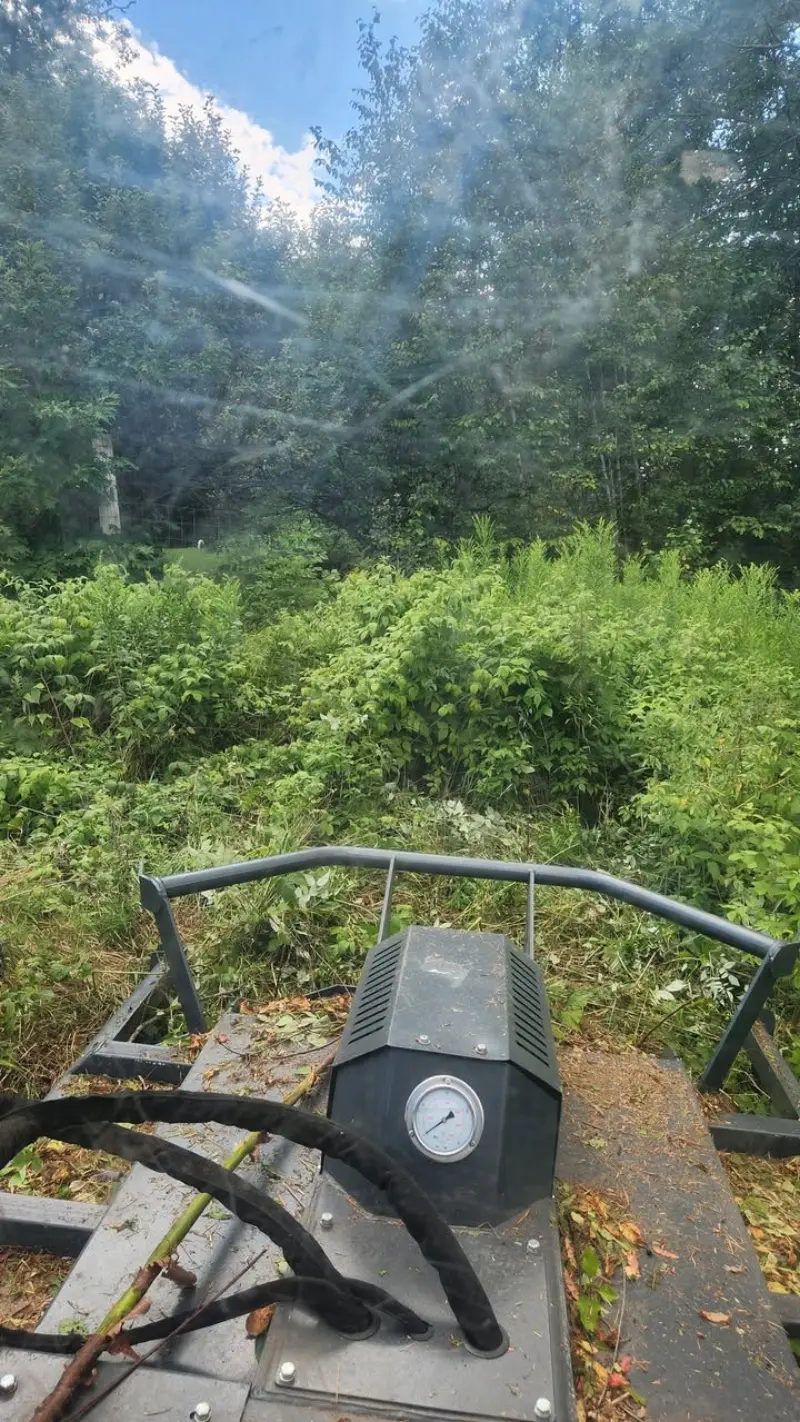
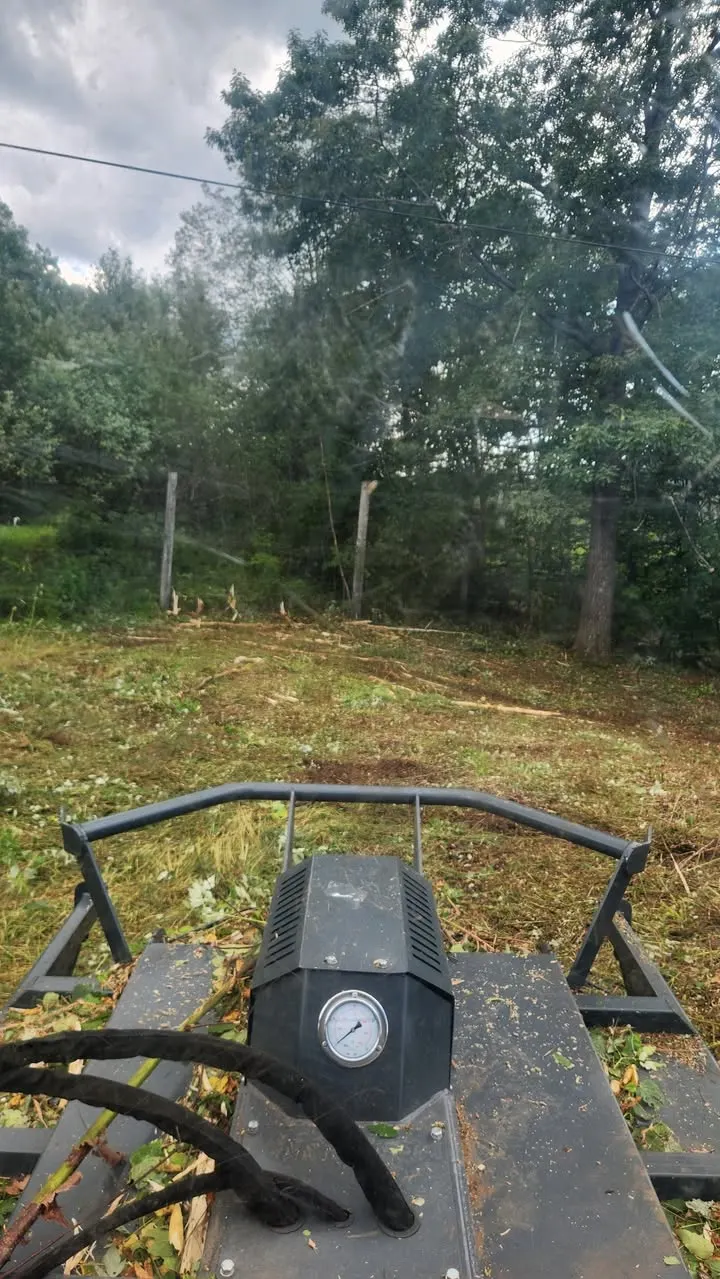
- Brush hog / cutter. For the initial knockdown on lots with heavy ground brush before the excavator goes through. Faster to mow first and pull stumps after than to dig through a wall of green.
- Dump truck. For hauling debris, stumps, and any logs that aren't staying. One truck handles most residential acres; bigger jobs run multiple loads or stage debris for a roll-off.
- Chainsaws and chipper when the scope warrants. For lots with a lot of brush going to chip vs. burn, a chipper on-site keeps the pile manageable.
I'm an owner-operator, so the same person who walks the site is the same person on the machine. No subs, no rotating crew, no surprise faces showing up.
What drives the cost
Lot-clearing prices vary more than almost any other service I do, because no two lots are the same. The variables that move the number:
- Acreage. The obvious one. But density matters more than acreage on small lots — a quarter-acre of dense growth can cost more than a half-acre that's mostly open.
- Density of growth. Light scrub vs. wall-to-wall saplings vs. mature mixed hardwood with stumps. Each tier roughly doubles the time per acre.
- Terrain and access. Flat lots with road frontage are cheap. Steep, rocky, or far back through the woods means more equipment time, more fuel, sometimes a tracked machine instead of wheeled.
- Disposal method. Burning on-site (where allowed) is the cheapest path. Chipping and hauling is more labor and truck time. Stump and root-ball haul-off is a separate cost line because they don't compress.
- Permits and buffers. Anything inside the NH Shoreland Water Quality Protection Act (RSA 483-B) buffer — 250 feet from a public water body — has real restrictions on tree and stump removal. Wetland setbacks and current-use parcels add more.
- Whether you want grading after. Rough grade is usually included; finish grade, loam, and seed are a separate phase priced on their own.
Towns I serve for lot clearing
Based in Hill (03243), with regular lot-clearing work across the Lakes Region:
Laconia, Franklin, Meredith, Northfield, Bristol, Plymouth, Gilford, Ashland, Sanbornton, Andover, Holderness, Tilton, New Hampton, Belmont, and Hill itself. From Newfound Lake down through the Pemigewasset valley and out around Winnipesaukee. If you're in a neighboring town, the answer is usually yes — ask.
What to expect, start to finish
- Site walk. I come out, walk the lot with you, talk through what you're trying to do (build, driveway, restore a field, whatever it is). I'll flag anything I see — ledge, wetland edges, trees worth keeping, access constraints. No charge for the visit.
- Written estimate. Itemized: brush and tree removal, stump work, disposal method, grading. If permits or buffers apply, that's flagged. If parts of the job are uncertain (ledge potential, unknown stump density), I'll structure it as a not-to-exceed so you're never blindsided.
- Schedule. Once we agree, I lock in a date. Lead times depend on the season — mud season and peak summer fill faster than fall and winter.
- Execution. Equipment shows up, work starts. On a typical residential lot I'm in and out in one to three days. Bigger or staged jobs run longer with status updates as the work progresses.
- Cleanup and walk-through. Debris gone, lot rough-graded, no equipment tracks left where they shouldn't be. I walk the lot with you again before invoicing so anything that needs another pass gets it.
What clients say
“I've recommended Shawn to several others over the years — tree work, drainage, dirt work, excavation. I wish there were ten stars instead of five.”
Frequently asked questions
How much does lot clearing cost in NH? Three things move the price more than anything else: how thick the growth is, what gets done with the wood and brush (chip and haul vs. burn on-site), and how much grading happens after. A lightly-grown acre I can roll through in a day; an acre dense with 4-inch saplings and stumps is closer to two or three. Burning on-site can save real money where the town allows it. Every job gets a free site walk and a written estimate before any work starts.
Do you burn the brush or haul it off? Either, depending on the lot. If your town allows open burning and the season is right, an on-site burn pile is the cheapest route. Otherwise I chip what fits a chipper, load logs and stumps into the dump truck, and haul to a yard waste site or the landowner's wood pile. I sort as I go so the cordwood-sized pieces don't end up in the chipper.
How long does it take to clear an acre? Open field with light scrub: half a day. Mixed brush and saplings under 3 inches: a full day. Dense growth with stumps to pull and trees up to 6 to 8 inches: two to three days. Anything bigger than 8-inch DBH typically goes through tree work as a separate scope so the lot prep doesn't stall waiting on chainsaws.
Do you grade the lot after clearing? Yes when it's part of the scope. Most lot-clearing jobs end with rough grading so the lot reads flat and water moves the right way. Finish grade for a lawn, driveway base prep, or septic field is usually a separate phase priced on its own. If you're clearing for a build, I'll work to your builder's spec.
Do I need a permit to clear a lot in NH? Most upland clearing on a typical residential parcel doesn't require a state permit. Anything within 250 feet of a public water body falls under the NH Shoreland Water Quality Protection Act (RSA 483-B) and has real limits on tree and stump removal. Wetland buffers, current-use parcels, and some town zoning add more rules. I'll flag what applies before I quote so you don't get surprised.
What time of year is best for lot clearing? Late fall through early spring is the best window. The ground is firm or frozen so equipment doesn't leave ruts, the brush has dropped its leaves so you can see what you're cutting, and the bugs are gone. Mud season (mid-March through May depending on the year) is the worst window. Summer is fine on dry, well-drained lots; on anything wet I'd rather wait.
Related services
- Excavation & site work — once the lot is cleared, foundation digs, driveway grading, utility trenches, and full site prep.
- Tree work & emergency response — for trees larger than 8-inch DBH, hazardous leaners, or storm damage that doesn't fit bulk clearing.
- Brush hogging — ongoing maintenance for fields, fence lines, walking trails, and view-lines after a lot has been cleared.
- Drainage & septic — if the cleared lot is going under a septic field, perimeter drains, or new building footprint.
- NH gravel driveway cost & build guide — if the clear is opening up access for a new driveway.